
A guide to recovering from hamstring pain

How do hip injuries occur?
The thigh muscles, including the gluteus maximus, gluteus medius, gluteus minimus, and piriformis, work together with the hamstrings, quadriceps, and iliopsoas to support everyday movements. When these muscles are injured, it can lead to limited mobility and even cause discomfort in the lower back or legs.
Movement Patterns and Causes of Injuries
Hip injuries can result from various movement patterns and biomechanical imbalances, such as:
- Gluteus maximus (hip extension): This muscle plays a key role in running and climbing stairs. If the hamstrings are weak or too tight, the gluteus maximus can be overloaded, increasing the risk of a strain.
- Gluteus medius (pelvic stabilization): Necessary for cycling and lateral movements (such as stepping sideways or walking on uneven terrain). If core strength is insufficient, the gluteus medius compensates, leading to fatigue or injury.
- Piriformis muscle (external rotation of the hip): This muscle can become tight from prolonged sitting or cycling, compressing the sciatic nerve, which can cause pain in the hip and legs.

What actions and behaviors can cause hip pain Injuries?
- Running and walking: Continuous movement up or down a slope places excessive strain on the gluteus maximus and hamstrings, increasing the risk of fatigue-related injuries.
- Cycling: Staying in a bent position for long periods of time can lead to strain in the piriformis and gluteus medius muscles, which can cause discomfort or pain.
- Climbing stairs or walking with heavy loads: Frequent use of the gluteal muscles to lift the legs, combined with poor posture or muscle weakness, can lead to a gluteus maximus strain.
- Prolonged sitting: Prolonged sitting strains the piriformis muscle, which can compress the sciatic nerve, leading to radiating pain in the hips and legs.
- Incorrect squat or deadlift technique: Poor technique during strength training can put excessive strain on the glutes and surrounding muscles, increasing the chance of injury.
How to recover quickly from a hip injury
1. Rest and apply cold therapy during the acute phase
If you experience increased pain, swelling, warmth, or limited mobility within the first 48 hours of your injury, you are likely in the acute phase. Rest and apply cold therapy to reduce inflammation. Once the acute phase has passed, consider the following recovery methods.
2. Massage tense muscles
Gluteus maximus, gluteus medius, piriformis: Relieves local pain and restores normal muscle tone.
Hamstrings: Reduces compensatory load on the thigh muscles.

Calf muscles: Improves overall flexibility of the muscular chain.
Superficial calf muscle

Deep calf muscles

3. Strengthening key musclesGluteus muscle
- Gluteus maximus and medius muscles: Improving hip stability with unilateral hip extension exercises.

- Muscles of the cortex: Improving pelvic muscle control through exercises such as the plank.

- Hamstrings: Strengthening helps optimize hip movements.

4. Maintain proper exercise form
Ensuring proper posture while running, regularly adjusting your posture while cycling, and maintaining proper form during workouts can help prevent re-injury to your hamstrings.
RheoFit can help you recover faster
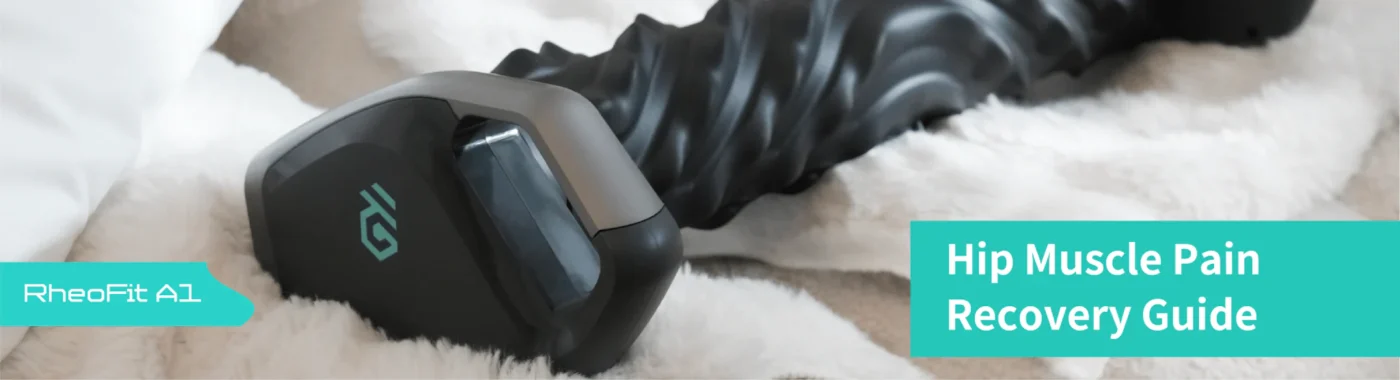
RheoFit A1 is a revolutionary automatic massage roller that provides easy muscle recovery for the whole body, especially for large muscle groups. It is compact, portable and convenient to use anywhere.
Main advantages of RheoFit A1
- Automatic massage: Easily relaxes the gluteus maximus, gluteus medius, piriformis, hamstrings and calf muscles.
- Compact & Portable: Whether at the gym, office or home, RheoFit A1 helps relieve fatigue and muscle pain on the go.

- AI-powered recovery: Personalizes massage sessions to the user's needs by automatically scanning the body and adjusting massage zones, speed, and duration—just like a personal physical therapist.

At RheoFit, we aim to take the guesswork out of muscle recovery. Instead of wasting time and effort trying to figure out how to relieve muscle tension, let our advanced artificial intelligence technology do it for you. With RheoFit A1, all you have to do is relax and recover.

By combining scientific rehabilitation with RheoFit A1, you can restore hip muscle health faster and return to an active life without pain. Move freely, live fully!